In today’s digital world, speed is no longer a luxury—it’s an expectation. Whether visitors are browsing your website from a desktop, tablet, or smartphone, they expect pages to load almost instantly. If your website takes too long to load, potential customers may leave before they even see your products or services.
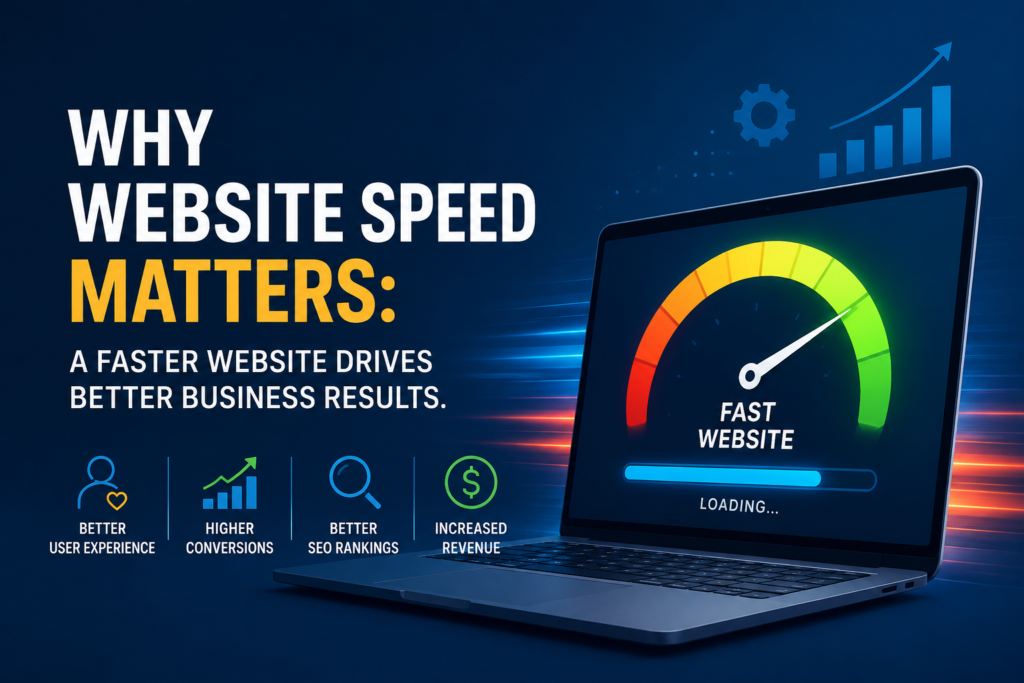
Website speed plays a crucial role in user experience, search engine rankings, conversion rates, and overall business success. A fast-loading website not only keeps visitors engaged but also builds trust, improves customer satisfaction, and increases revenue.
Let’s explore why website speed matters and how it directly impacts your business growth.
What Is Website Speed?
Website speed refers to how quickly your website loads and becomes fully interactive for visitors. It includes everything from displaying images and text to allowing users to click buttons, navigate pages, and complete actions without delays.
A high-performing website typically loads within 2 to 3 seconds. Any longer, and there’s a higher chance users will leave before interacting with your content.
1. Creates a Better User Experience
First impressions matter.
When visitors land on your website, they immediately form an opinion based on how quickly it loads. A fast website feels professional, trustworthy, and reliable.
On the other hand, slow-loading pages often frustrate users, causing them to leave without exploring your services.
Benefits of a fast user experience:
- Smooth browsing
- Faster navigation
- Better engagement
- Increased customer satisfaction
- Higher chances of return visits
2. Improves Search Engine Rankings
Search engines like Google consider website speed as one of the ranking factors.
A faster website provides a better experience for users, which is exactly what search engines want to deliver. While speed alone won’t guarantee the top position, it significantly contributes to better SEO performance when combined with quality content and proper optimization.
Better speed can help:
- Improve search rankings
- Increase organic traffic
- Reduce crawl issues
- Enhance overall website performance
3. Reduces Bounce Rate
Bounce rate refers to the percentage of visitors who leave your website without interacting with it.
When pages load slowly, users often lose patience and exit before reading your content.
A faster website encourages visitors to stay longer, browse multiple pages, and explore your products or services.
Lower bounce rates often indicate a healthier, more engaging website.
4. Increases Conversion Rates
Every second matters when it comes to online conversions.
Whether your goal is generating leads, selling products, booking appointments, or collecting inquiries, website speed directly impacts your conversion rate.
A smooth and fast browsing experience builds confidence and encourages users to complete their desired action.
Businesses with faster websites often experience:
- More inquiries
- Higher sales
- Increased sign-ups
- Better customer engagement
5. Builds Trust and Brand Credibility
A slow website can make even a great business appear outdated or unreliable.
Customers naturally associate a fast website with professionalism, quality, and credibility.
When users enjoy a seamless experience, they are more likely to trust your brand and recommend it to others.
Website performance reflects your commitment to customer satisfaction.
6. Supports Mobile Users
Today, a large percentage of website traffic comes from mobile devices.
Mobile users often browse using different network speeds, making website optimization even more important.
A mobile-friendly, fast-loading website ensures visitors can access your content quickly regardless of where they are.
This leads to:
- Better mobile experience
- Increased engagement
- More conversions from mobile users
- Improved accessibility
7. Enhances Overall SEO Performance
Website speed doesn’t work alone—it strengthens your overall SEO strategy.
Fast websites make it easier for search engines to crawl pages efficiently while improving user engagement metrics like time on site and page views.
Combined with quality content and proper optimization, speed becomes a powerful advantage for long-term search visibility.
8. Gives You a Competitive Advantage
In competitive industries, every detail matters.
If two businesses offer similar products or services, customers are more likely to choose the one with the faster and smoother website experience.
A high-performing website helps you stand out from competitors while leaving a lasting positive impression.
Common Reasons Why Websites Become Slow
Several factors can reduce website performance, including:
- Large, unoptimized images
- Poor-quality web hosting
- Too many plugins
- Heavy JavaScript and CSS files
- Unoptimized code
- Excessive redirects
- Lack of browser caching
- Too many third-party scripts
Identifying and fixing these issues can significantly improve loading speed.
Tips to Improve Website Speed
Here are some practical ways to make your website faster:
Optimize Images
Compress images without sacrificing quality to reduce page load times.
Choose Reliable Hosting
Invest in a quality hosting provider that delivers fast server performance.
Enable Browser Caching
Allow returning visitors to load your website more quickly by storing static resources.
Minify CSS, JavaScript, and HTML
Reduce unnecessary code to improve loading efficiency.
Use a Content Delivery Network (CDN)
Distribute website content across multiple servers worldwide for faster delivery.
Remove Unnecessary Plugins
Only keep essential plugins that add real value to your website.
Optimize for Mobile
Ensure your website performs smoothly across all screen sizes and devices.
Monitor Website Performance
Regularly test your website using performance tools and address any issues promptly.
The Business Impact of Website Speed
A fast website offers benefits far beyond technical performance.
It helps businesses:
- Improve customer experience
- Increase search engine visibility
- Generate more leads
- Boost online sales
- Build stronger brand credibility
- Increase customer retention
- Stay ahead of competitors
Website speed is an investment that delivers long-term business growth.
Conclusion
Website speed is one of the most important factors influencing your online success. Visitors expect fast, seamless experiences, and search engines reward websites that deliver them.
By improving your website’s loading speed, you can enhance user experience, strengthen your SEO, reduce bounce rates, increase conversions, and build lasting trust with your audience.
In today’s competitive digital landscape, every second counts. Investing in website performance isn’t just about faster pages—it’s about creating better experiences that drive real business results.
If you want your website to attract more visitors, keep them engaged, and convert them into loyal customers, improving website speed should be one of your top priorities.