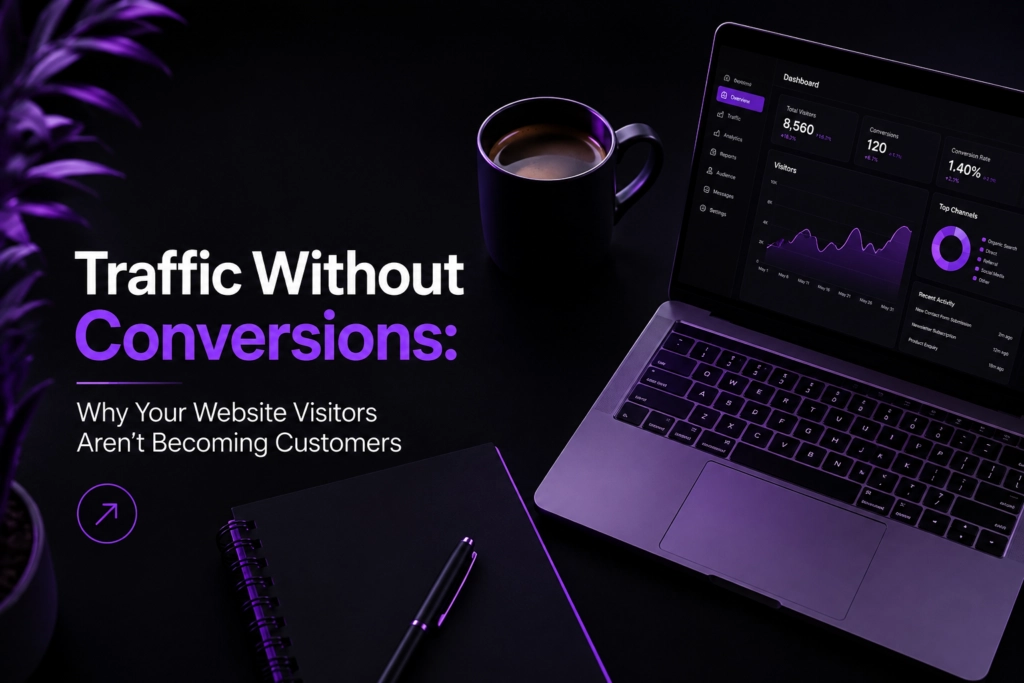
Have you ever checked your website analytics and felt excited to see hundreds or even thousands of visitors, only to realize that very few of them became customers?
Driving traffic to your website is a great achievement, but traffic alone doesn’t guarantee success. If visitors leave without taking any meaningful action, your website isn’t reaching its full potential.
In this blog, we’ll explore why website visitors don’t convert, the common reasons behind low conversion rates, and practical strategies to turn more visitors into loyal customers.
What Is a Website Conversion?
A website conversion is any valuable action a visitor completes on your website. The type of conversion depends on your business goals.
Some common website conversions include:
- Purchasing a product
- Filling out a contact form
- Booking a consultation
- Downloading an eBook or guide
- Signing up for a newsletter
- Creating an account
Every conversion brings a visitor one step closer to becoming a customer.
Why Website Traffic Alone Isn’t Enough
Getting visitors to your website is only the first step. A high number of visitors may look impressive in analytics, but if they leave without taking action, your business won’t grow.
Imagine owning a retail store where hundreds of people walk in every day but nobody buys anything. That’s exactly what happens when your website receives traffic but no conversions.
The real goal of digital marketing isn’t just attracting visitors—it’s encouraging them to take meaningful actions that support your business.
Why Visitors Leave Without Converting
There are several reasons why visitors leave a website without becoming customers.
Your Value Proposition Isn’t Clear
Visitors should immediately understand what your business offers and why they should choose you. If your message is confusing or unclear, they’ll likely leave within a few seconds.
Weak or Missing Call-to-Action (CTA)
Every page should guide visitors toward the next step. Clear CTA buttons such as Contact Us, Get Started, Book a Free Consultation, or Shop Now encourage users to take action.
Without a clear CTA, visitors often leave without doing anything.
Slow Website Speed
A slow-loading website creates frustration and increases bounce rates. Users expect pages to load quickly.
You can improve website speed by:
- Compressing images
- Using reliable hosting
- Reducing unnecessary plugins
- Enabling browser caching
Content Doesn’t Match User Intent
Visitors come to your website expecting answers or solutions. If your content doesn’t meet their expectations, they’ll leave and look elsewhere.
Creating helpful, informative, and relevant content improves engagement and encourages visitors to stay longer.
Lack of Trust
People are more likely to buy from businesses they trust.
Build credibility by including:
- Customer testimonials
- Customer reviews
- Secure payment badges
- Contact information
- Privacy Policy
These trust signals reassure visitors that your business is reliable.
Poor Mobile Experience
Most people browse websites using smartphones. If your website isn’t mobile-friendly, visitors may leave before exploring your content.
Ensure your website is responsive, easy to navigate, and performs smoothly across all devices.
How to Turn Visitors Into Customers
Improving your website’s conversion rate requires continuous optimization and a customer-focused approach.
Create Helpful Content
Publish valuable content that answers your audience’s questions and solves their problems. Helpful content builds trust and positions your business as an authority in your industry.
Use Clear Calls-to-Action
Guide visitors toward the next step with clear and attractive CTA buttons placed throughout your website.
Improve Website Performance
Optimize your website’s loading speed, navigation, and overall user experience to reduce bounce rates and increase engagement.
Build Trust
Display customer reviews, testimonials, certifications, and clear contact information to improve credibility and encourage visitors to take action.
Optimize for Mobile Devices
Test your website on different screen sizes and ensure it provides an excellent browsing experience for mobile users.
Monitor and Improve Performance
Use tools like Google Analytics, Google Search Console, and Microsoft Clarity to understand visitor behavior and identify opportunities for improvement.
Common CRO Mistakes to Avoid
Even websites with high traffic can struggle to generate conversions if they make common optimization mistakes. Some of the most common CRO mistakes include:
- Using confusing or unclear CTA buttons
- Having slow-loading web pages
- Displaying too many pop-ups that interrupt the user experience
- Creating lengthy or complicated contact forms
- Ignoring mobile optimization and responsive design
- Failing to build trust through testimonials, reviews, and security badges
- Not testing different landing pages or CTA buttons
Avoiding these mistakes helps create a smoother user experience and encourages visitors to complete the desired actions on your website.
Best Tools to Improve Website Conversions
Improving website conversions requires understanding how visitors interact with your website. Several digital marketing tools can help you identify problems, analyze user behavior, and make data-driven improvements.
Some of the most effective conversion optimization tools include:
- Google Analytics – Tracks website traffic and conversion performance.
- Microsoft Clarity – Provides heatmaps and session recordings to help you understand how visitors interact with your website.
- Hotjar – Offers heatmaps, session recordings, surveys, and feedback tools to improve the user experience.
- OptinMonster – Helps create pop-ups, lead generation forms, and personalized campaigns to increase conversions.
Regularly monitoring these tools helps businesses identify opportunities for improvement, enhance the user experience, and increase conversion rates over time.
Conclusion
Driving traffic to your website is an important milestone, but it’s only the beginning of the customer journey. Real success comes from converting visitors into leads, customers, and loyal brand advocates.
By creating valuable content, improving user experience, building trust, using effective calls-to-action, and continuously optimizing your website, you can transform website traffic into measurable business growth and achieve better long-term results.
Frequently Asked Questions (FAQs)
What is a website conversion?
A website conversion happens when a visitor completes a desired action, such as making a purchase, submitting a contact form, subscribing to a newsletter, or booking a consultation.
Why am I getting website traffic but no sales?
Common reasons include unclear messaging, weak calls-to-action, slow website speed, poor user experience, lack of trust signals, and content that doesn’t meet user expectations.
How can I improve my website conversion rate?
You can improve your conversion rate by creating helpful content, strengthening your CTAs, improving website speed, building trust, optimizing for mobile users, and regularly analyzing visitor behavior using analytics tools.